Why did Usain Bolt win?
Firstly, its because of his legs. Being 6ft 5in tall allows Usain Bolt to take wider (and thus fewer) steps over a 100m race than his smaller rivals. On Sunday night he took 41 steps to win the Olympic final. Yohan Blake took 46 steps and Justin Gatlin took 42.5 steps.
Secondly, what makes Bolt special is that he also possesses great strength and flexibility, which allows him to accelerate quickly and maintain a very high top speed. As Dr Ross Tucker of The Science of Sport website explains: "I've not seen such an elastic runner before. Bolt's advantages stem from a superior stretch-shortening cycle function, which allows energy to be stored and used more effectively. We know from research that power output is proportional to the amount of energy that can be stored and released from the muscle-tendon junction during the muscle contraction."
Lastly, he had a quick reaction time, After the race, Bolt admitted that he was worried about a false start and so "sat on the blocks a bit" while he waited for the gun. His reaction time of 0.165sec, however, was actually faster than Blake (0.179sec) and Gatlin (0.178sec). As usual, Bolt was slower to build up to top speed than his nearest rivals, but his fast reaction time meant that although Gatlin was ahead of him early on, he was always within catching distance. Bolt could keep calm, and let his long legs do the rest.
These reasons provided the fulcrum to Bolt's olympic record and are the physics in his win.
Sunday, September 9, 2012

Sea Otters Can Help Reduce CO2
A new study by two researchers has revealed that sea otters can help reduce CO2 in the atmosphere.
How?
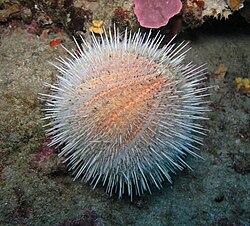
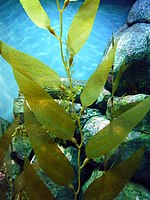
A thriving sea otter population that keeps sea urchins in check will in turn allow Kelp forests to prosper. The spreading Kelp can absorb as much as 12 times the amount of carbon dioxide from the atmosphere than if it were subjected to ravenous sea urchins.
 Kelp is effective at removing carbon dioxide through photosynthesis. Carbon dioxide concentration in the atmosphere has increased 40 percent since the beginning of the Industrial revolution, causing global temperatures to rise that has also resulted in the rising sea levels. Thus, this can help to reduce global warming and scientists are excited that this can help in global protection efforts, even if it only helps a little.


I feel that this is a fantastic finding as the Kelps can reduce 12 times the amount of carbon dioxide compared to us and it would help more in saving the environment. Of course, we can only increase it by increasing the population of sea otters. Thus, I feel angry at those who only think of their profits and kill the sea otters for their skin instead of thinking about the greater good in saving the environment.

How?
A thriving sea otter population that keeps sea urchins in check will in turn allow Kelp forests to prosper. The spreading Kelp can absorb as much as 12 times the amount of carbon dioxide from the atmosphere than if it were subjected to ravenous sea urchins.

I feel that this is a fantastic finding as the Kelps can reduce 12 times the amount of carbon dioxide compared to us and it would help more in saving the environment. Of course, we can only increase it by increasing the population of sea otters. Thus, I feel angry at those who only think of their profits and kill the sea otters for their skin instead of thinking about the greater good in saving the environment.

Wednesday, September 5, 2012
Haze
Haze is traditionally an atmospheric phenomenon where dust, smoke and other dry particles obscure the clarity of the sky.

What are the causes of haze?
Sources for haze particles include farming (ploughing in dry weather), traffic, industry, and wildfires. In Singapore, haze comes from the burning of plantations in neighboring country Indonesia. The haze would float towards Singapore from Indonesia through winds as it is the North-East Monsoon and the wind would blow North-East towards us.
What are the complications of haze?
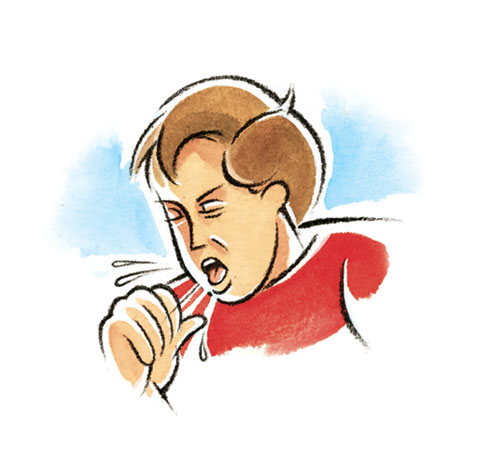
Health of people would be affected, especially for people with health complications. Some people who have Asthma have an endangered life as the haze would affect their breathing. Visibility is also affected, thus resulting in hundreds of flights cancelled due to the haze, which makes the airplanes unable to navigate and touchdown/liftoff. Haze not only affects the health of citizens, but also affect the economy of neighboring countries and is thus a hazard.
Solutions
As the 2011 chair of ASEAN, Indonesia has an ambitious plan to implement a haze agreement this year. Land and forest fires are normally massive in dry season with its haze reached neighboring nations such as Singapore and Malaysia, making it the only member in the region that has not ratified the haze treaty since it was sanctioned in 2003.
The agreement binds statutory countries to take steps to stop haze pollution from land and forest fires within their territories, through strict regulations, heat-seeking satellites and firefighting training. President Susilo Bambang Yudhoyono has set a target to cut 20 percent of hotspots per year.
Sunday, September 2, 2012
Term 3 Reflections
I did not do well for my term 3 test. However, I hope to get at least an A2 in EOY Science Test. I have to work harder and improve in my weaker topics such as Acids and Bases and hope to work on them during the holidays.
What I have learnt this term:
I have learnt more about lenses and the sexual reproduction in plants and humans. I also learnt more about colours.
Plan for next term:
I'm planning to focus on my weaker topics and work on them during the holidays, as well as revise my previous topics over and over again so as to ace the final exam.
What I have learnt this term:
I have learnt more about lenses and the sexual reproduction in plants and humans. I also learnt more about colours.
Plan for next term:
I'm planning to focus on my weaker topics and work on them during the holidays, as well as revise my previous topics over and over again so as to ace the final exam.
Wednesday, August 8, 2012
Curiousity
"Touchdown confirmed. We are safe on Mars!"

"We have just blown dust all over the place with our descent engines," says one NASA scientist.
A high resolution image showing the horizon and dust particles on the camera have just arrived. Amazing stuff. Extraordinary to see this work so smoothly. The landing was the most complex ever attempted on an alien world. There were celebrations at NASA's Jet Propulsion Lab in California as the Mars Curiosity rover touches down on the red planet. A huge success for the US space agency.
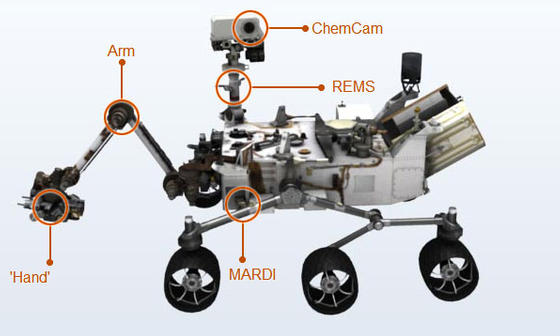
I feel that the landing of NASA's rover, Curiousity, represented a "huge leapt for Mankind". Firstly, it is the most advanced technology to have reached our neighboring planet for scientific work. Of course Mars' Curiosity is famously not looking for life on Mars, but for signs of ancient habitable environments. This is a prospecting mission. The first job is to find areas where life may have survived had it ever evolved on Mars. Once those places are found – if they exist – scientists will know where to send future missions to look for direct signs of past life on the planet. Thus, it is important to have sent Curiousity so as to further our findings.
Wednesday, June 6, 2012
Term 2 Reflections
I did not do well in my Science Test this term and I hope to do much better in my Science Test next term. I did not do well most probably because I did not understand the concept of the reaction between the acids and I hope to clarify my doubts in term 3.
What i learnt this term:
I learnt Acids and Bases, and different types of reactions and confirmatory test such as the confirmatory test of hydrogen by using a lighted splint and bubbling carbon dioxide into limewater to test for carbon dioxide. I also learnt about reflection and refraction, how light rays bend and also the colours of light.
What I hope to learn next term:
I hope to learn more about lenses and how the positions of different images would affect how the reflection is. I am also looking forward to learn about the reproductive system in humans and plants.
What i learnt this term:
I learnt Acids and Bases, and different types of reactions and confirmatory test such as the confirmatory test of hydrogen by using a lighted splint and bubbling carbon dioxide into limewater to test for carbon dioxide. I also learnt about reflection and refraction, how light rays bend and also the colours of light.
What I hope to learn next term:
I hope to learn more about lenses and how the positions of different images would affect how the reflection is. I am also looking forward to learn about the reproductive system in humans and plants.
Tuesday, May 8, 2012
Tasmanian Devils
Evolving to become less aggressive could be key to saving the Tasmanian Devil, famed for its ferocity, from extinction, research suggests. This species is being wiped out by the Devil Facial Tumour Disease (DFTD), a fatal infectious cancer spread by biting. A study found out that less often a devil gets bitten, the more likely it is infected with this disease.
They came to this conclusion from three discoveries: The level of bites were similar at both sites, devils with fewer bites were more likely to be infected with this disease, and most tumours occurred in the devil's mouths. "This means that the more aggressive devils who have less chance of getting bitten bit the tumours of the less aggressive devils and become infected" Dr. Hamede explained.
However, there are currently no cure or vaccine to this disease.
I feel that understanding how this infectious disease is key to controlling them, but also feel a little sense of lost hope as scientist have found out that studying it in animals is very difficult. However, this news has shown that it is still possible to study these animals and that might be cure for other animals in the future.

They came to this conclusion from three discoveries: The level of bites were similar at both sites, devils with fewer bites were more likely to be infected with this disease, and most tumours occurred in the devil's mouths. "This means that the more aggressive devils who have less chance of getting bitten bit the tumours of the less aggressive devils and become infected" Dr. Hamede explained.
However, there are currently no cure or vaccine to this disease.
I feel that understanding how this infectious disease is key to controlling them, but also feel a little sense of lost hope as scientist have found out that studying it in animals is very difficult. However, this news has shown that it is still possible to study these animals and that might be cure for other animals in the future.

Subscribe to:
Comments (Atom)